

We move through life in a fog of uncertainty.
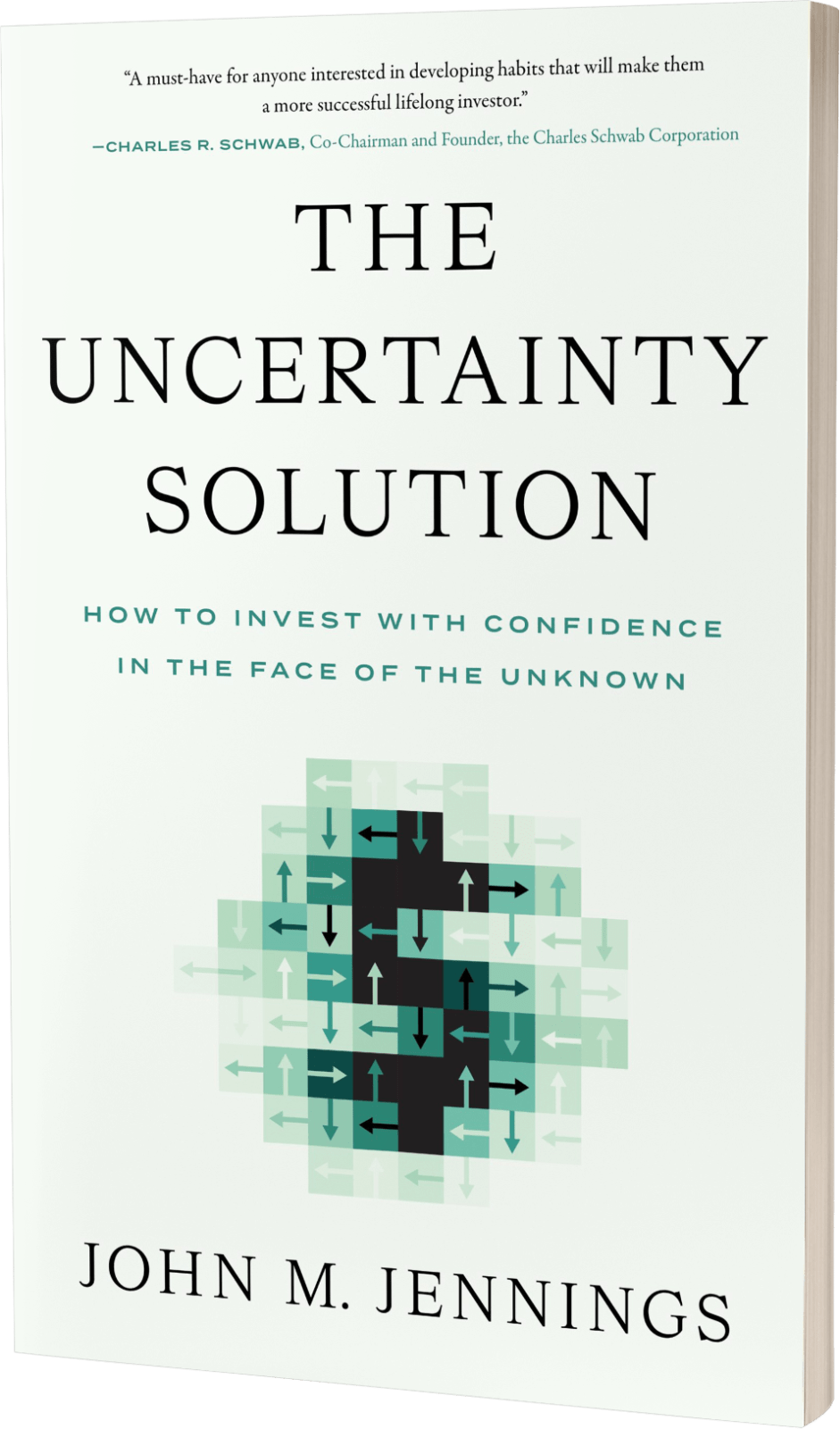
Most uncertainty is no big deal. Not knowing exactly how the weather will turn out today, whether your morning commute will go smoothly, or what you’ll have for dinner are minor uncertainties that don’t cause much angst. But then there are bigger uncertainties like health issues, not knowing if your student visa will be issued in time to study abroad, and waiting for test results. These more considerable uncertainties cause stress, worry, and anxiety. What stinks is that these bigger, uncertain situations usually have no easy solution. You just have to sit in the discomfort of the uncertainty. Bummer. But in researching my book The Uncertainty Solution, I discovered a formula for dealing with uncertainty developed in the 1960s by psychiatrist and anxiety specialist Claire Weekes that will help you remain calm as you face the unknown.
Dr. Claire Weekes
Claire Weekes was an Australian physician who was a pioneer in identifying and treating anxiety. She suffered from crippling anxiety as a young adult, which gave her perspective about how to treat it.
Her insight was that trying to run away from anxiety or fighting it doesn’t work. Instead, it is better to fully experience and acknowledge anxiety and curate skills that allow the patient to pass through to the other side of their panic. Reminiscent of FDR’s statement that “the only thing to fear is fear itself,” Weekes thought a driver of anxiety was a cycle of worrying about worrying. “Fear starts a vicious feedback loop between the mind and the body. They get stuck in a fear cycle. You are in a state because you are frightened of yourself, frightened of the dreadful feeling of fear, frightened of your own symptoms, mental and physical, which seem to have consumed you.”
The Six-Word Mantra
In 1962, Weekes published a book titled Self-Help for Your Nerves, which became an international bestseller, and laid out her prescription for dealing with anxiety and the panic it causes. Her recommended approach for treating anxiety is found in a six-word mantra: Face, Accept, Float, Let Time Pass. Here are the details:
1. Face your feelings of anxiety and uncertainty. Acknowledge them, and don’t run from them.
2. Accept what is happening and that you are experiencing uncertainty and anxiety.
3. Float — let your feelings of anxiety, panic, and fear float by — observe your emotions but stay above them. Step away from our own thoughts and observe them as a third party.
4. Let Time Pass — don’t be impatient or upset that things aren’t better. Just sit in your discomfort and let things play out.
Each step of this process seems paradoxical at first; we are accustomed to avoiding painful and distressing things. But running from our fears can lead to our world shrinking as we structure our lives and interactions so that we can steer clear of those things that trigger anxiety. Trying to avoid anxiety can result in living in fear of experiencing anxiety or having a panic attack — it’s like having a cloud follow you around or waiting for the next shoe to drop.
When dealing with a stressful and uncertain situation, I walk myself through Dr. Weekes’s four-step process and then say the six-word mantra repeatedly. I found this helpful back in 2021 when I dealt with a health scare. I had developed pain in my calf, but I work out a lot, so I thought I had pulled a muscle. A week later, when my entire leg swelled up, I knew it wasn’t just a pulled muscle. It turns out I had two blood clots in my calf and two more in my lungs. I was put on blood thinners and scheduled for a CT scan a week later to see if my clots were caused by cancer. Waiting for the results of a medical test to tell me if I had cancer was the very definition of uncertainty-fueled anxiety. Dr. Weekes’s formula helped me stay calm and ride out the uncertainty.
My CT scan ended up fine. I didn’t have cancer. And the clots are gone. It turns out I had a congenital defect related to how an artery and vein are arranged in my abdomen called May-Thurner Syndrome that caused the clots, which has been fixed via surgery. I guess being vegan for over twenty years and exercising regularly don’t make you bulletproof!

So true about the bulletproof part. There are things beyond our control! Still, we need to do all we can to prevent health issues by eating sensibly and looking for warning signs.