

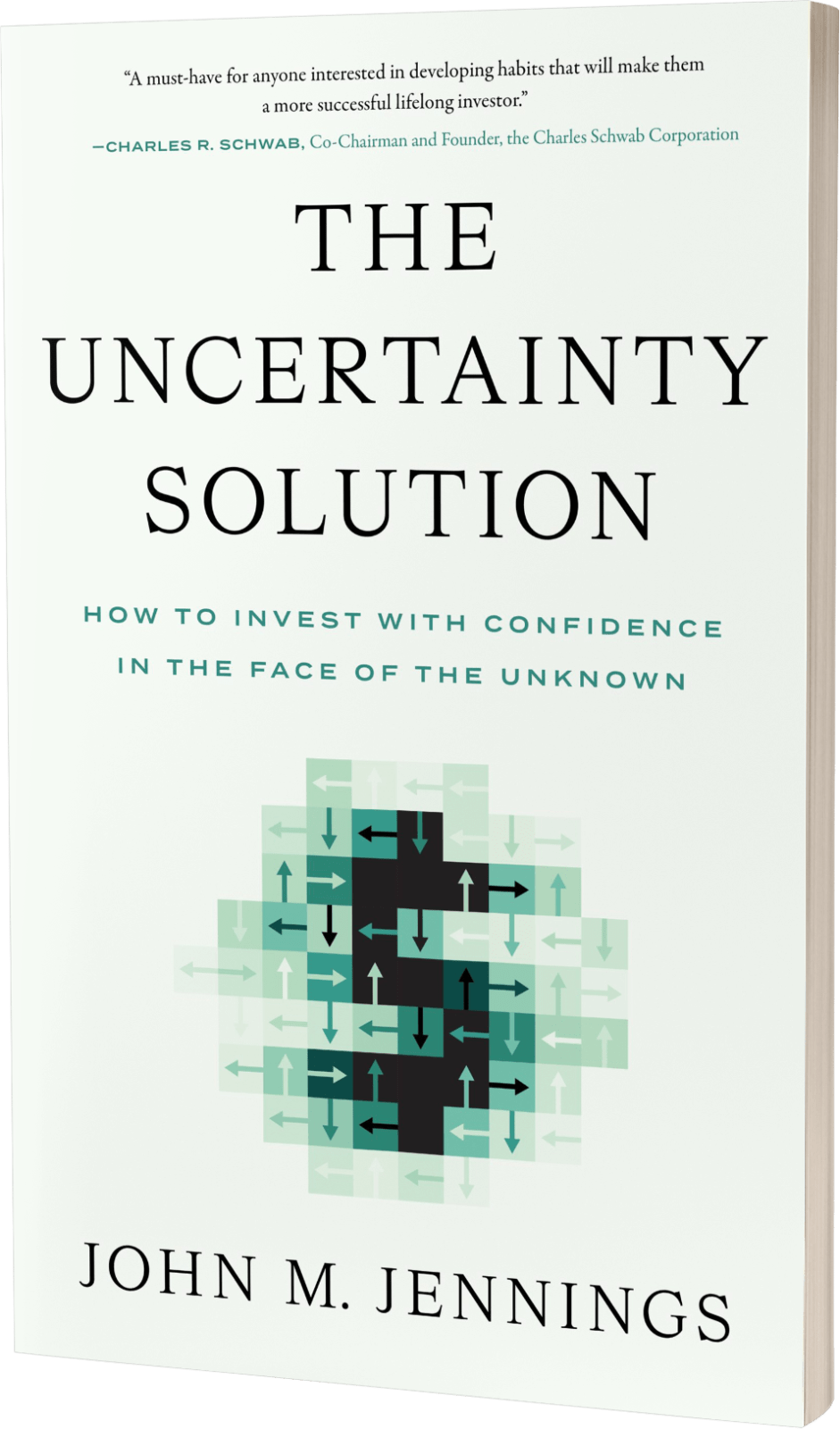
My first book, The Uncertainty Solution: How to Invest with Confidence in the Face of the Unknown, was published one year ago today. It’s been a fun year, as I’ve been on 30 podcasts and 15 radio shows and have given speeches about my book all across the country (and even in Switzerland). Writing, publishing, and promoting The Uncertainty Solution has been an overwhelmingly positive experience, and the book has furthered my personal brand and that of my company. It’s been such a great experience that I’m writing a second book (about wealth and happiness).
But when it comes to book sales, I’m glad I have a day job.
Most Books Don’t Sell Many Copies
Book sales follow a power law distribution, meaning that a tiny number of books sell a ton, while most don’t sell many copies.
Between 500,000 and 1,000,000 new books are published in the U.S. each year, and the median book sells around 200 copies per year and less than 1,000 over its lifetime. Data from 2020 revealed that only 268 titles sold more than 100,000 copies, and 96 percent of books sold less than 1,000 copies. Just 2% of books sold more than 5,000 copies.
So, publishing companies are like venture capital investors: their profits come from just a relatively few hugely successful books, while most books lose them money. For example, during the antitrust trial that blocked Penguin Random House’s merger with Simon & Schuster, it was revealed that 60% of Penguin’s profits are driven by just 1.5% of their titles. Source.
Sales of My Book
Over the past year, I’ve discovered that asking an author how many copies their book has sold is sort of like asking someone how much money they make—unless their book is flying off the shelves it is a potentially embarrassing question because the vast majority of books don’t sell well.
My book has done well (but not great), having sold about 3,400 copies across print, eBook, and audio formats. Given the publishing industry stats shared above, I’m thrilled and humbled that 3,400 people plunked down their hard-earned money to read what I wrote. But I’m also disappointed that the figure isn’t higher.
Selling Books is Hard
Yes, selling 3,400 copies is great! And it continues to sell 20 – 40 copies a week, which is also great (and these sales are probably due to word-of-mouth recommendation, given that the marketing of my book has tapered off to nearly zero, which I find deeply satisfying).
But, given all the promotion of the book I’ve done, I’m surprised it hasn’t sold more. For example, last summer, I was on the podcast We Study Billionaires and my episode had 90,000 downloads. During the week that the podcast was released, my book sold 125 copies. Likewise, I was also on the Motley Fool podcast, which also had tens of thousands of listens and generated few sales. About six weeks ago, the Real Estate Philosopher newsletter, which has 50,000 subscribers, touted my book, and sales that week barely budged. And so on, and so on . . . .
I’ve given some thought to why my book hasn’t sold more copies, and I think it comes down to a few factors:
1. The book market is crowded. As previously mentioned, over 500,000 new books are published every year, making it hard to stand out. Plus, most people don’t read many (or any) books. See recent IFOD on this point. If you are only going to read a handful of books a year, you might not want to read one about investing behavior.
2. My book’s topic isn’t one that makes people want to run out and buy it. Its main topic is how to have better investing behavior, and that’s a niche area. Plus, it doesn’t promise quick fixes or easy riches — it’s more of an “eat your broccoli” sort of book.
3. If you listen to me interviewed for 30, 60, or 90 minutes on a podcast, you will probably get the gist of the book and most of its important points. You don’t need to read the book unless you’re especially interested in the topic and want to learn more.
4. And who knows what makes something more or less popular? Publishing companies aren’t great at figuring out in advance which books will sell and which ones won’t. The same goes for movies, TV shows, and music. Quality isn’t perfectly correlated with popularity. Here’s a super interesting IFOD on this point: The Matthew Effect or The Rich Get Richer
Looking back over this past year, I conclude that selling books is just hard. Overall, I consider the book a great success. Even though its sales haven’t landed me on Good Morning America, it has achieved all the other goals I had for it, like landing speaking engagements, elevating our firm’s brand, and assisting in generating new clients. And I’m proud of it. My biggest fear as I started to write it was that it wouldn’t be any good, but I’m happy with how it turned out.

I may never buy your book because I don’t care about investing, BUT, a big but, I write fiction and your insights about selling books was worthy a ton! Thank you very very much! Seriously.
Congrats John! I enjoyed the book (and bought 2)!
You accomplished something that others only think of doing! I’m proud of you!
Maybe you could come at it from a different angle & write a fiction about an intelligent teenage boy, (who thinks as you do), and grew up going from rags to riches.
I was shocked with those numbers, despite that I know that the topic is not those people usually picks and it is a crowded market, I would for sure had added at least a 0 to your book sales, we cannot predict 😉 Anyway, congratulations, I really enjoyed your book, I am know reading Black Swan (pending task) and I can tell you that for now it is not as enjoyable as yours. Regards from Uruguay.
I think you gave away too many copies!
Great insights–good book.
Thank you for your insights John. You achieved what most people only dream of doing; you wrote a great book.
It’s definitely a book worth being proud of John – it’s hard to write in an educational AND entertaining way – this book did both!
I thought the book was great and worth reading and recommending!
Congrats John. It kind of sounds like completing a marathon. Very difficult to do. Amazing achievement if you did it. The distribution of 2hr, 3hr and 4 plus hour times is probably a lot like the book sales distribution, so you always might be a little PO’d about how you did…but still a source of major pride.